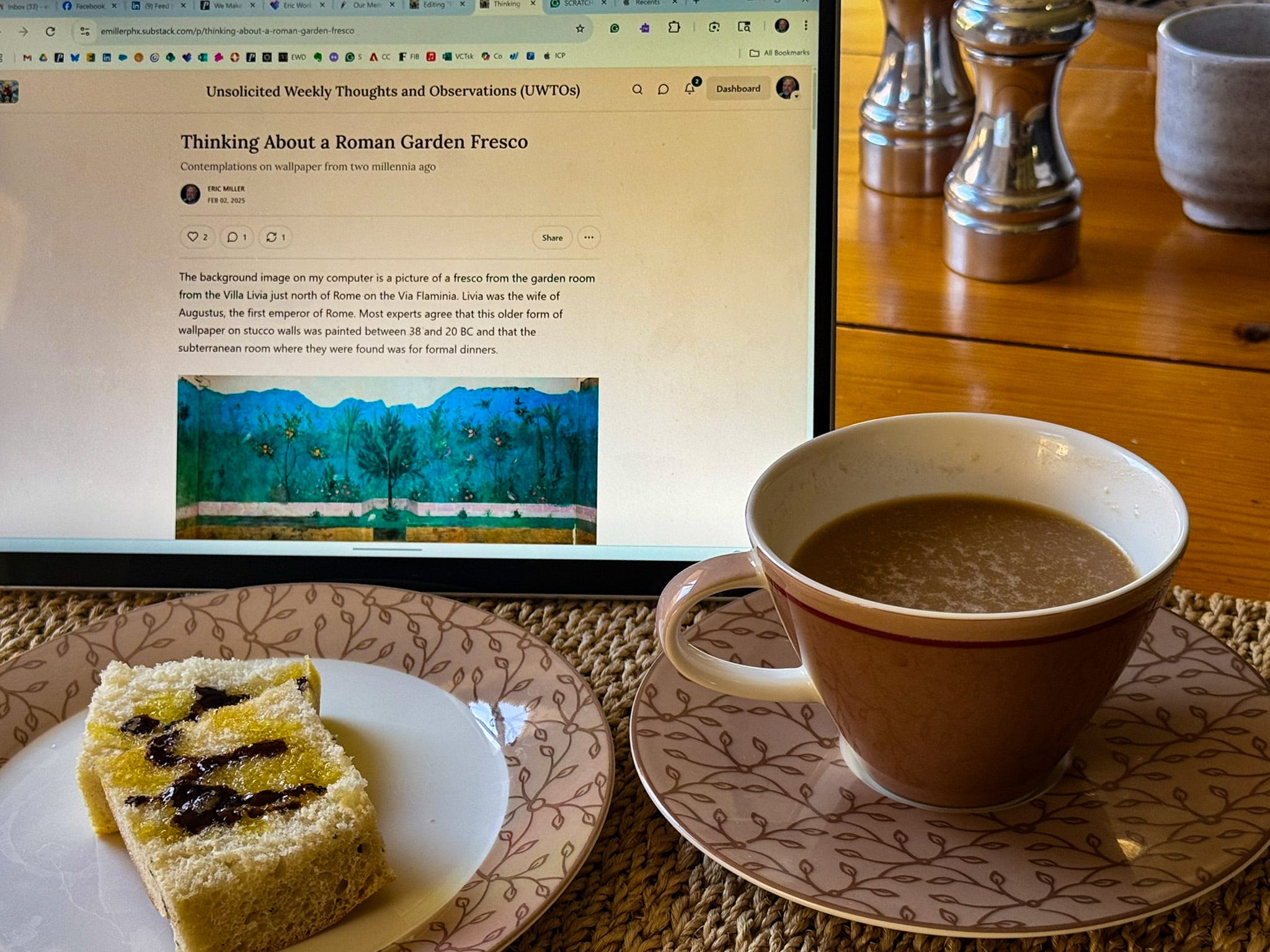
Focaccia!
The power of the flat Italian loaf and my recipe for it

"I'll bake some Focaccia."
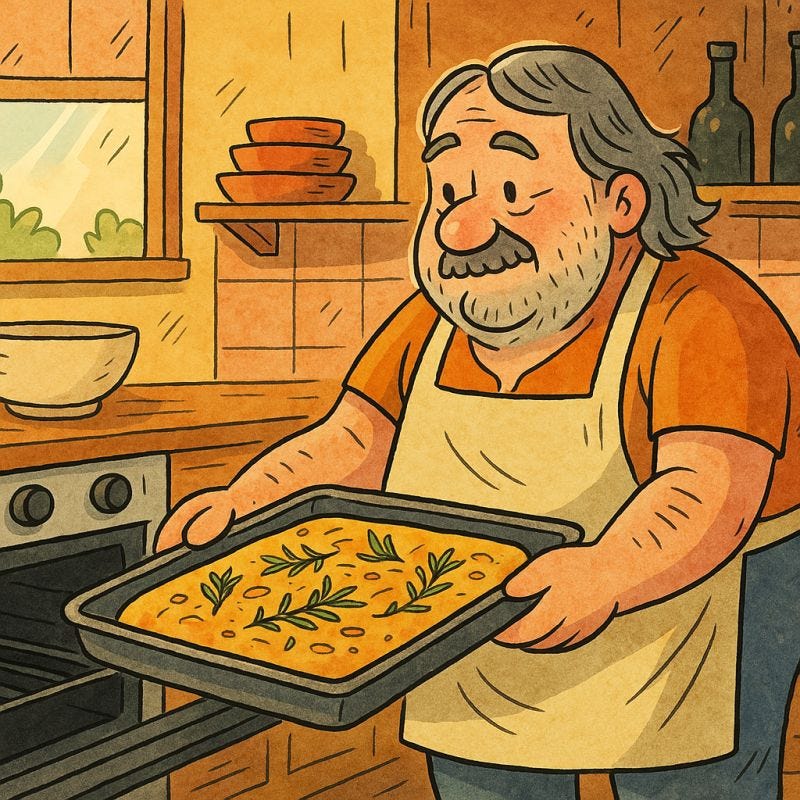
As writers, we all want to see our words generate a strong, emotional response. So, I was pleased with the overwhelming avalanche of feelings my simple announcement on LinkedIn brought forth. Sure, mentioning that you were doing a sourdough loaf would get a rise out of people. And "I'm going to make a salad" doesn't seem to increase anyone's heartbeat. But Focaccia? I got comments, questions, and likes from far more people than my post on “5 Recommendations for Effective Product Management.” And from people I rarely hear from. So, what is so special about Focaccia?
I have no idea. But that won't stop me from guessing why this Italian flatbread earned such a fan base.
[If, like me, you hate long stories before a recipe, skip on down with this link]
There's Something in the Name
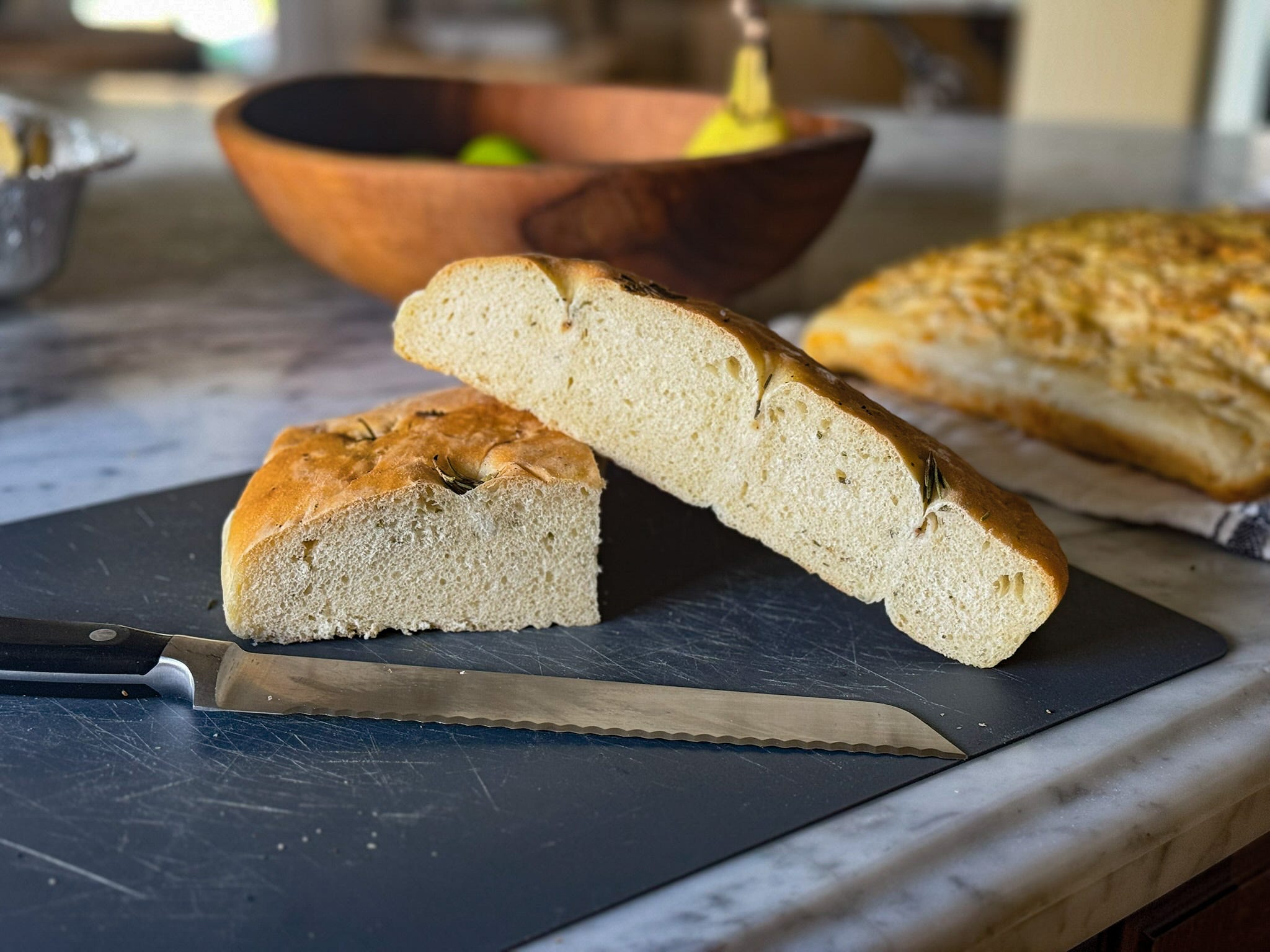
Let's start with the name. It is a bit of a poem in and of itself. Foe-Ka-Cha. I know it sounds even better when someone with an Italian accent says it. Saying it is almost like chewing for me. Looking the word up, I'm pleased to learn it comes from the ancient Roman Latin "panis focacius," which means bread from the hearth because it was baked over coals. If you have followed this substack, you know I love ancient Roman things. So, even though this is a new fact for me, it makes me love my rectangles of bread even more.
More Italian than Spaghetti
I'm sure there are people who don't love all things Italian, but I'm not friends with them. Vespas and Armani clothes and Tuscan views all have something unique and soulful in them. And, of course, there is the food. Focaccia is a uniquely Italian creation, not derived or borrowed like Spaghetti or popularized in a foreign land like pizza. This simple bread conjures up each person's unique attachment to the quintessential Mediterranean country. It may be a visit or time in a favorite neighborhood Italian restaurant or a movie or a book. Or, perhaps, even a former lover. For me, it reminds me of my time as a teenager in Rome, walking the streets and being overwhelmed by so much culture and art, intentional and accidental.
I think gelato may be the only Italian culinary creation with more power.
Simple Taste
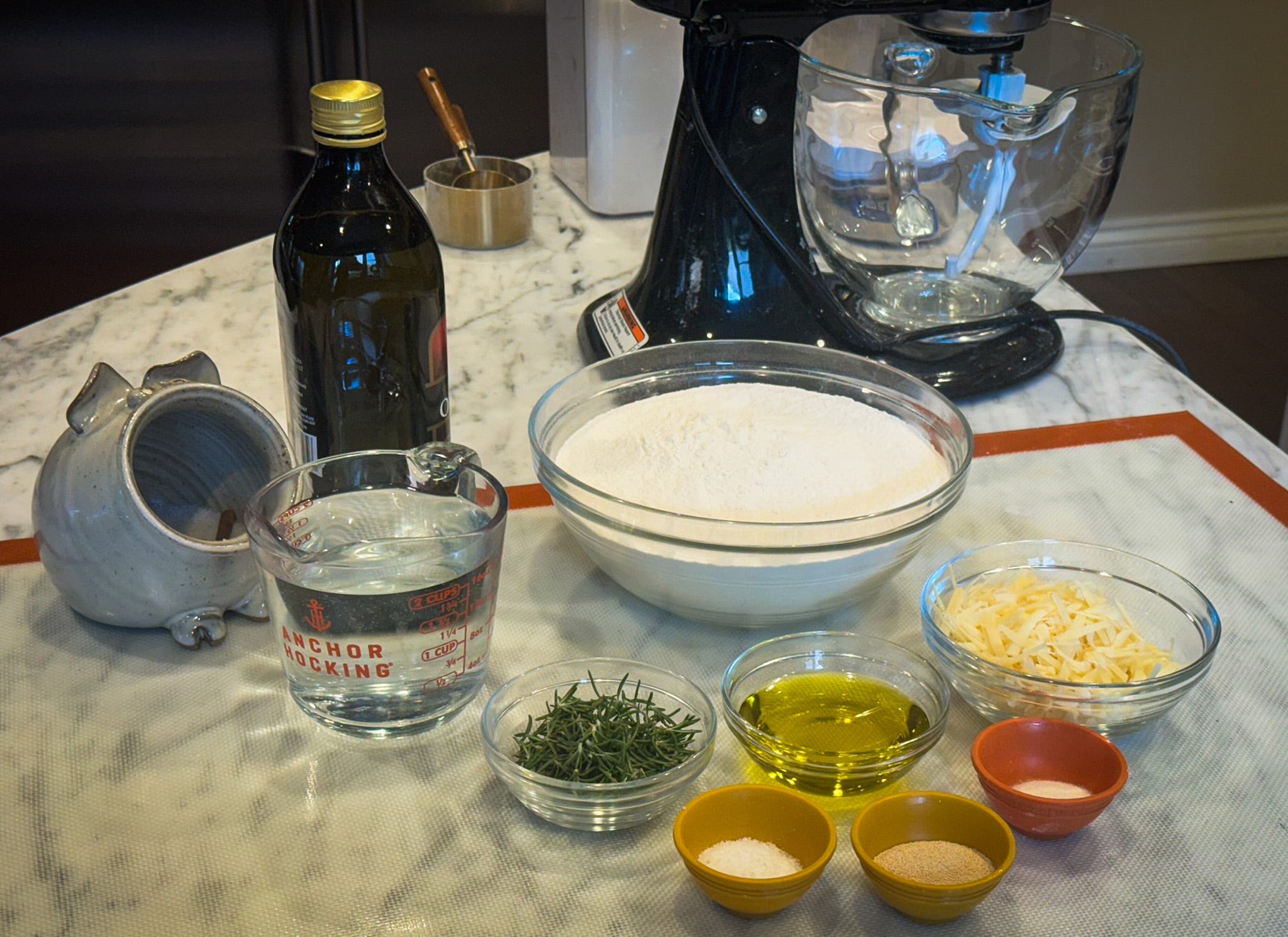
Focaccia is a simple bread. The base is flour, olive oil, salt, and yeast. You can add to it, traditionally herbs. I always do a loaf with parmesan. Some people veer towards pizza and put tomato sauce, sausage, and cheese on top. It's a simple creation — knead, rise, shape, rise, bake — keep the flavors very simple. I think the salt helps a lot, too.
Best to Just Eat Some
I think I'll stick with these reasons for the strong response I got to my baking declaration — a great name, associations with Italian memories and experiences, and a great taste. That works for me. I think I’ll have another piece.
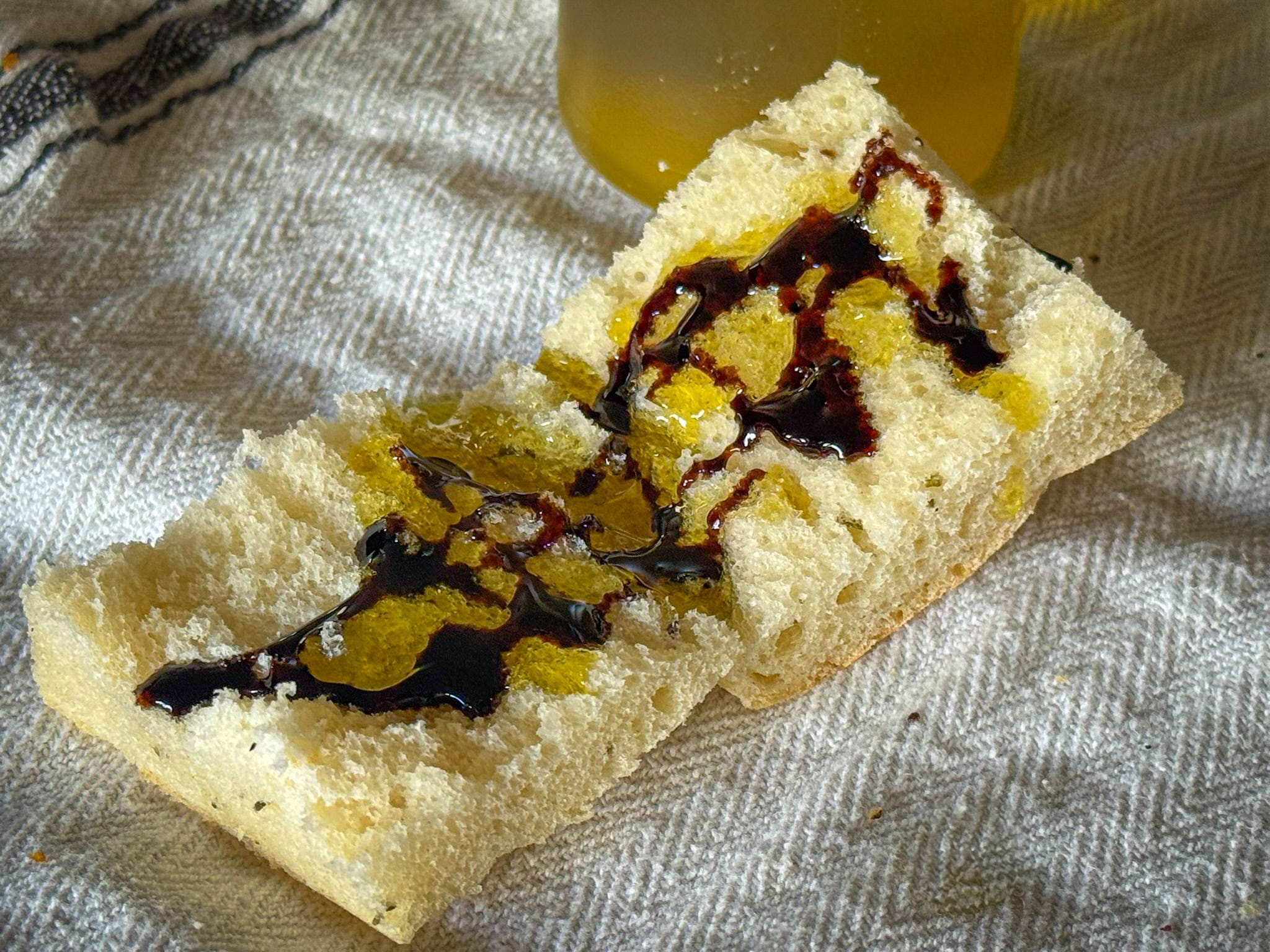
Thyme Focaccia and Parmesan Focaccia
And after that, finally, here is the recipe.


I thought I got this recipe out of the wonderful Williams Sonoma series of cookbooks. But nope. I found a printout in a folder I keep with the cookbooks, and it was an Epicurious post from August 20, 2004, originally from Gourmet magazine.
2 1/4-ounce packages (5 teaspoons) active dry yeast
1 teaspoon sugar
2 cups warm water (105°‐115° F.)
1 tablespoon table salt
5 1/2 cups all-purpose flour
1/3 cup olive oil
2 teaspoons minced fresh thyme leaves
2 tablespoons cornmeal
1/2 cup coarsely grated Parmesan
Coarse salt for sprinkling
Freshly ground black pepper for sprinkling
Step 1
In a standing electric mixer fitted with paddle attachment, beat together yeast, sugar, and water and let stand 5 minutes, or until foamy. In a bowl, stir together table salt and 5 cups flour. Stir oil into yeast mixture. With motor on low speed, gradually add flour mixture to yeast mixture. With dough hook knead dough 2 minutes, or until soft and slightly sticky.
Step 2
Transfer dough to a floured surface and knead in enough remaining flour to form a soft but not sticky dough. Form dough into a ball and put in an oiled large bowl, turning to coat. Cover bowl with a kitchen towel and let dough rise in a warm place until doubled in bulk, about 45 minutes.
Step 3
Transfer dough to a lightly floured surface and divide in half. Knead thyme into one half and knead plain half 1 minute. Form each half into an oval and invert bowl over them. Let dough rest 5 minutes for easier rolling.
Step 4
Preheat oven to 450° F.
Step 5
Oil two 13- by 9-inch baking pans and sprinkle each with 1 tablespoon cornmeal (I have nice non-stick pans,so I skip this part). On lightly floured surface with a floured rolling pin roll out dough halves into 13- by 9-inch rectangles and fit into pans. Cover each pan with a kitchen towel and let dough rise in a warm place until doubled in bulk, about 20 minutes.
Step 6
Sprinkle plain dough with Parmesan and sprinkle both doughs with coarse salt and pepper. With lightly oiled fingertips make indentations, about 1/2 inch deep and 1 inch apart, all over dough rectangles and bake in middle of oven 12 minutes, or until golden. Remove focaccie from pans and cool on racks.